
Emergency Water Removal, 24/7 Nationwide
The floor is wet. That is the whole emergency. Water Removal Pros answers (888) 846-0214 at any hour, including weekends and holidays, and dispatches a local crew to get the water out of the building.
One service. Emergency water removal. Not a kitchen remodel, not a mold contract, and not a fire rebuild. If the water is still on the floor, in the carpet, running from a ceiling, or standing in a basement, this is the call. You will hear a real arrival window for your city. If that address cannot be reached tonight, you will be told. The line does not book a time nobody can make.
Emergency Water Removal: One Focused Service
This is the only service on the site. A burst pipe, a dead sump pump, a sewage backup, a ceiling leak, and a soaked carpet are not five companies and not five products. They are ways the same visit starts. The crew still does one job first: make the house safe, stop more water if that is possible, and remove the water that is already in the building.
Whether a supply line let go on the second floor or a sump pump failed during a torrential storm, our local dispatch units arrive equipped with truck-mounted vacuum extractors, submersible trash pumps, industrial dehumidifiers, and thermal imaging cameras to halt moisture migration immediately.
What the Visit Is
Emergency water removal is the first hours after a leak, a backup, or a storm, not the weeks of putting rooms back together.
The technician looks at where the water came from and how dirty it is. Standing water is pumped and extracted. Meters check the walls, the floor, and the rooms next to the one you noticed. Materials that cannot be cleaned come out and get photographed. Materials that can dry stay, and drying equipment runs only while the readings say they are still wet. You leave with notes an adjuster, a landlord, or a property manager can actually use.
Plumber vs. Water Removal
A plumber may still need to replace a pipe or a pump. Call this line first when the floor is already wet. A new pipe does not pull water out of a pad or a wall cavity. If the pipe is broken and the floor is still dry, call a plumber instead. This crew is for water that has left the pipe.
Rebuild & Repairs Are Separate
Repair of drywall, flooring, and trim is a second estimate, written after the structure is dry. You can accept it or hire someone else. It is not folded into the emergency invoice.
What to Do in the First 10 Minutes
Take these crucial safety and documentation steps while our mobile extraction unit is en route to your address:
Stay out of water near outlets, the electrical panel, a furnace, or a water heater. If you smell gas, leave and call the utility. Do not look for the shutoff by wading.
If the source is a supply line and you can reach the main from a dry floor, shut it. In most houses the main is where the line enters, often on a basement wall or in a utility closet.
Keep children and pets out of the wet rooms. Sewage and street water are a health problem, not a mopping problem.
Photograph the source, the water line on the wall, and every wet room before you move furniture. Insurers ask for this, and so does a landlord if the leak came from another unit.
Lift lamps, shoes, and small furniture onto something dry only if you can do it without stepping into deep or dirty water. Leave soaked drywall and insulation alone.
Call (888) 846-0214. Have the city, the street, how deep the water looks, and whether the power is still on.
What NOT to do: Do not run a household vacuum. Do not cut drywall yet. Do not point a box fan at water that smells like sewage. A shop vac can lower a shallow puddle on bare tile. It will not dry a carpet pad, a wall cavity, or a basement that is still filling, and it is a shock risk in standing water.
How Dirty the Water Is Changes the Whole Job
Crews do not treat every gallon the same. The IICRC S500 standard sorts the water so the cleanup matches the risk. You will see the category written on the notes. Tell the dispatcher what you smell and what you see. A sewage call and a hot-water-heater call do not go on the truck the same way.
Fresh Supply Lines & Water Heaters
A supply line or a water heater, at the moment it fails. It is the best case, and only if extraction happens the same day. It does not stay clean after it sits in a pad and a wall for a couple of days. Crews then treat it as more contaminated than it was in the first hour.
Appliance Discharges & Overflows
Washer discharge, a dishwasher, an aquarium, or supply water that has mixed with detergent and dirt. It can irritate skin and it soils more of the finish. More material gets thrown out than on a clean-water loss.
Sewage, Street Floods & Black Water
Sewage, a floor drain that backed up, water that came in from the street or a river, and water that has been stagnant long enough to belong in this group. Porous materials that soaked it up usually cannot be saved: carpet pad, drywall at the wet height, insulation, and soft contents. The crew uses real protection.
Where It Usually Starts
Common residential water intrusion scenarios we extract and dry every day across all 48 states:
Burst or Frozen Supply Line
A split line can release a large volume in minutes. In cold weather the pipe often opens when the room warms back up. Shut the main. Extraction the same day is what saves the finishes.
Water Heater Rupture
Tanks fail at the bottom or at a fitting and empty onto the floor. The water is hot. Do not step in it. By the time most people notice, the tank has already dumped what it held.
Washer, Dishwasher, Toilet or Ice Maker
Hoses and ice lines are a top source in kitchens and laundry rooms. Once waste is in the water, treat the room as sewage and stop using other fixtures if the drain is surcharging.
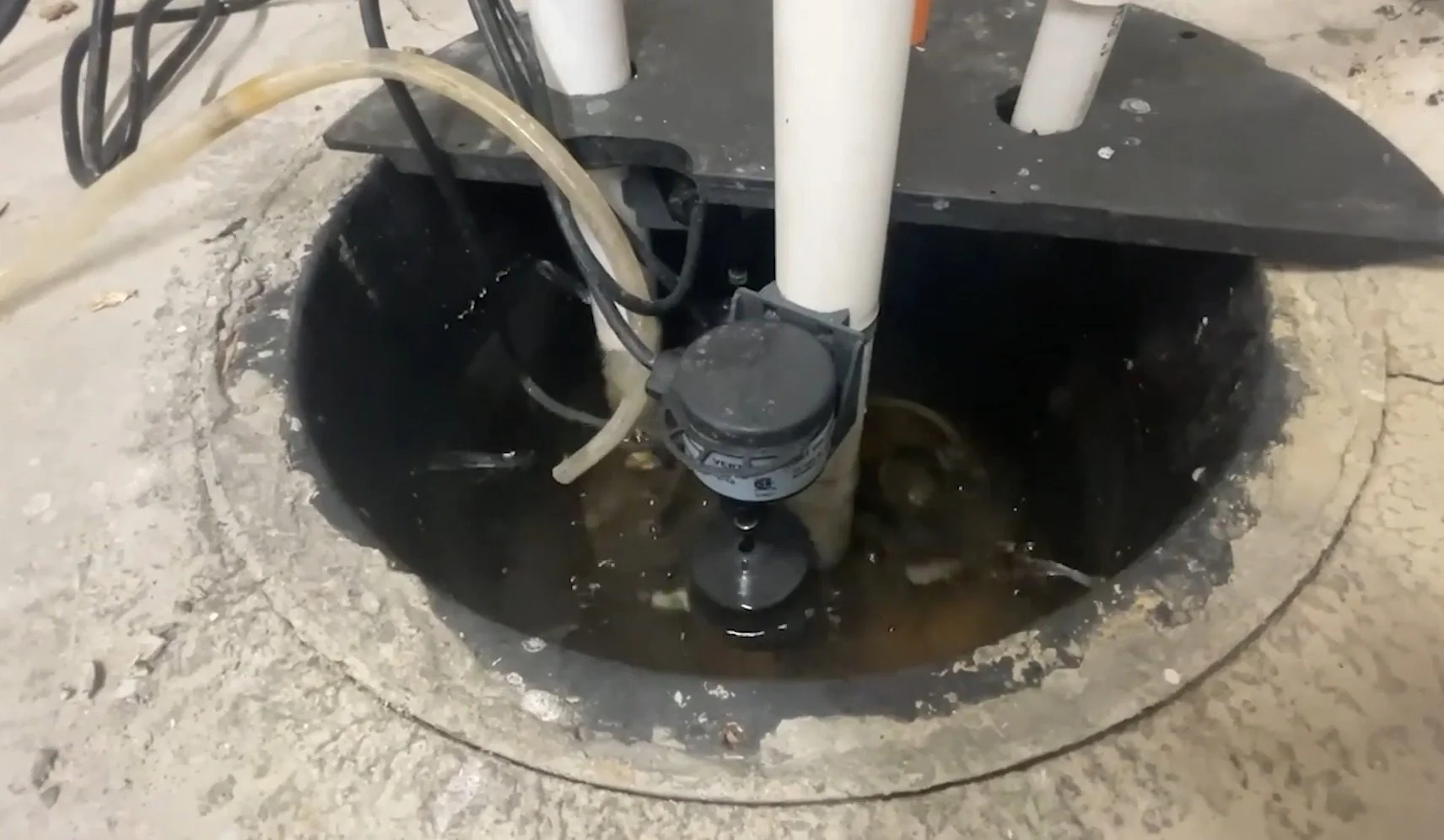
Sump Pump System Failure
Power failed in the storm, the float stuck, the discharge line froze, or silt jammed the intake. Photograph the pit, switch, and water line before moving the pump for insurance proof.
Flooded Basement
This is where most water ends up. Finished basements hold more water in carpet and wall board. An unfinished slab shows the water faster and hides less of it.
Flooded Crawl Space
Water under the house does not stay under the house. It moves into joists and into the floor you walk on. Access, standing water, and wet insulation change the visit.
Ceiling Leak or Unit Above
A bubble in the paint or a dripping light fixture means water is in the cavity. Do not poke the bulge while standing under it. Kill power to that fixture from a dry spot.
Sewage or Floor Drain Backup
Keep everyone out. Do not run fans. A standard policy often excludes sewer backup unless you bought that endorsement. The health problem does not wait on the claim.
Rain or Street Floodwater Intrusion
Rising street or ground water is a flood (requires flood policy). Rain through a storm-damaged roof opening is often treated as sudden. The crew removes the water either way.
Floors, Walls, and What Can Be Saved
Material science determines restorable vs. non-salvageable building components:
Carpet & Pad
The face of the carpet can sometimes be cleaned and put back. The pad underneath usually cannot, once it has been underwater or soaked with dirty water. A wet pad left down is why the room smells on day three.
Hardwood & Plaster
Water is inside the material, not just on the finish. Cupping and buckling show up after the surface looks dry. Drying takes longer than carpet. Nobody should sand wet wood on the first day.
Drywall
It wicks water up from the floor. On a dirty loss it is cut above the water line so the cavity can dry, then replaced after readings normalize. Clean, lightly wet board is sometimes dried in place.
Concrete & Slabs
A slab will look dry and still hold deep water in the pores. Calibrated moisture meters, not a hand on the surface, decide when structural drying is complete.
Insulation
Fiberglass and cellulose act like a sponge. Once dirty water is in them, they come out. They do not get fluffed and pushed back into the wall cavity.
How the Crew Works, In Order
Our standardized 8-step operating procedure executed on every emergency water call:
City, address, source, depth, and whether anyone is in water. Active spreading water is prioritized over stable stopped losses.
Power and gas checked before extraction. Main valve shut if plumbing is still running. We never pump against an open feed.
Clean, gray, or black water classified. You are told which one you have, driving what is saved versus bagged.
Submersible trash pumps for deep water; truck-mounted and portable extractors for carpet and floors. Sump basins cleaned of silt.
Pin/pinless moisture meters and thermal imaging cameras scan walls, subfloors, and adjacent rooms so no moisture pocket is missed.
Saturated pad, sewage-soaked drywall, insulation, and ruined items are bagged, photographed for insurance, and hauled away.
LGR dehumidifiers and high-velocity air movers placed strategically. Equipment runs until readings confirm structural baseline dry.
Photos, category documentation, daily drying logs, and itemized Xactimate estimates provided for you and your insurance adjuster.
The Clock: Why Hours Matter
Water damage accelerates exponentially with every hour of delay:
Water crosses the slab or finished floor and enters pad, baseboards, and the bottom of the drywall.
Drywall softens. Wood at the bottom of the wall wicks water upward. Humidity rises enough to affect unsoaked areas.
The U.S. EPA critical window. After 48 hours, wet materials are often discarded because mold has the moisture it needs.
Call anyway. The water still has to come out. The job is larger, finishes are lost, and dirty water degrades further. Waiting does not make it cheaper.
What It Costs: Transparent Planning Ranges
Nobody on a national homepage can price your house without seeing the loss. A figure given before anyone has seen the water is a guess. The number that counts is the scope, given after a look and before the work expands.
| Water Category | Typical Source | Planning Range per Sq. Ft. |
|---|---|---|
| Category 1 (Clean) | Supply line, water heater | About $3 to $4 / sq ft |
| Category 2 (Gray) | Washer, dishwasher, dirty supply | About $4 to $6.50 / sq ft |
| Category 3 (Black / Sewage) | Sewage, outside floodwater, stagnant | About $7 to $7.50+ / sq ft |
A single room with a clean-water line break often lands between $1,200 and $3,500. A loss that crossed several rooms, or that came through a ceiling onto the floor below, moves into several thousand dollars. Sewage costs more because of protection, disposal, and the amount that has to leave the house. New drywall, flooring, and paint are not inside these ranges.
What Moves the Number on Your Street:
- Wet square footage, including closets and stairs, not only the room where you noticed the water.
- How dirty the water is (Clean vs. Gray vs. Biohazard Black water).
- A finished basement versus an open slab (Finished rooms hold more water).
- Stairs, no driveway, or nowhere to park an extraction truck.
- An overnight, weekend, or holiday start.
- How many hours the water sat before you called.
Insurance, Without the Sales Pitch
Water Removal Pros does not sell policies and does not decide claims. The crew documents the loss. Your agent and your carrier decide payment.
Generally Covered (Sudden & Accidental)
Many homeowners policies pay when water was sudden: a burst pipe, a water heater that let go, an appliance hose, or rain through an opening a storm just created.
Usually Excluded (Unless Endorsed)
Floodwater from outside (requires flood policy), slow leaks left alone, sewer backup (needs endorsement), or sump pump overflow (needs water-backup rider, often $5,000–$25,000 limits).
Starting removal quickly supports your policy duty to mitigate and limit further loss. It is not a promise the carrier will pay. If you already know you do not have the endorsement, say so on the call. You can still hire extraction. You should not be told the job is covered when the policy is silent.
Why People Call This Number
(888) 846-0214 is answered by a person, including overnight. The crew sent to the address is local to that city, not a single truck crossing the country. The scope you hear before the equipment runs is the scope on the invoice.
24/7 Human Dispatch
Live phone intake. You get an honest arrival window based on current weather and road conditions.
Local Licensed Crews
Technicians meet the liability insurance and licensing rules where the house sits.
Checkable Standards
Water category written down, moisture readings logged daily, and drying verified by calibrated meters.
Real Homeowner Experiences
Actual emergency responses from homeowners across the country:
"Our second-floor laundry line split at 2 a.m. The crew arrived in 45 minutes, extracted 3 rooms of water, and set dehumidifiers. The final bill matched the exact scope given on arrival."
"50-gallon tank dumped across the hallway and master bedroom. They pulled the saturated carpet pad, sanitized the slab, and provided detailed photos for our insurance claim."
"Storm knocked power out and the basement filled with 4 inches of groundwater. The truck pumped it out, checked the walls with thermal cameras, and dried the framing in 3 days."
Frequently Asked Questions
Direct, honest answers about emergency water removal, pricing, insurance, and drying timelines.
Making the area safe, stopping more water when that is possible, extracting standing water, checking hidden moisture, removing materials that cannot be saved, drying what can be saved, and giving you photos and readings. Rebuilding the rooms is separate.
Call (888) 846-0214. You get a window for your city. Water that is still spreading goes ahead of a stable loss. A storm that flooded the whole town slows every crew. You will be told the truth on that call. There is no 30-minute promise to every address in the country.
Clean-water extraction and drying often plans around $3 to $4 per square foot. Gray water is higher. Sewage is higher still. One clean room is often $1,200 to $3,500. Your price is the scope at the house, before the work grows.
Sometimes, when the release was sudden. Often not, for outside flood, a long-term leak, or sewer and sump backup without the extra endorsement. The crew can document the loss. Only the carrier can approve it.
On many clean-water losses, yes, if the wet rooms close off and the power is safe. No, or not in part of the house, when the water is sewage or the wet area is most of the floor you live on.
Clean supply water is the lowest risk, and only while it is fresh. Appliance water is dirtier. Sewage, drain backups, and street water should be treated as hazardous. Keep skin out of them, and do not run a fan across them.
Only for a small puddle on a hard floor, with the power safe. Not for carpet pad, not for a wall, not for a filling basement, and not for dirty water.
A stuck float, a clogged intake, a frozen or blocked discharge line, or a motor that overheated. Power at the outlet only rules out the breaker. Photograph the pit and describe it on the call.
Wet floor: (888) 846-0214. Dry floor and a bad pipe or a dead pump: a plumber. If both are true, stop the water, then the extraction. The repair of the fixture can follow.
No. First floors, ceilings, crawl spaces, and basements. Basements are simply where a lot of this water collects. The service is emergency water removal.
Standing water is usually out the same visit. Drying a typical room often takes one to three days. Hardwood, plaster, and concrete take longer because the water is in the material. Equipment stays until the readings are normal.
Call and give the town, not the nearest big city, unless that is truly where the house is. If a crew can make the drive tonight, you get a window. If not, you will hear that too.